

How to Track Strength Training on a Smartwatch Without Gym Equipment
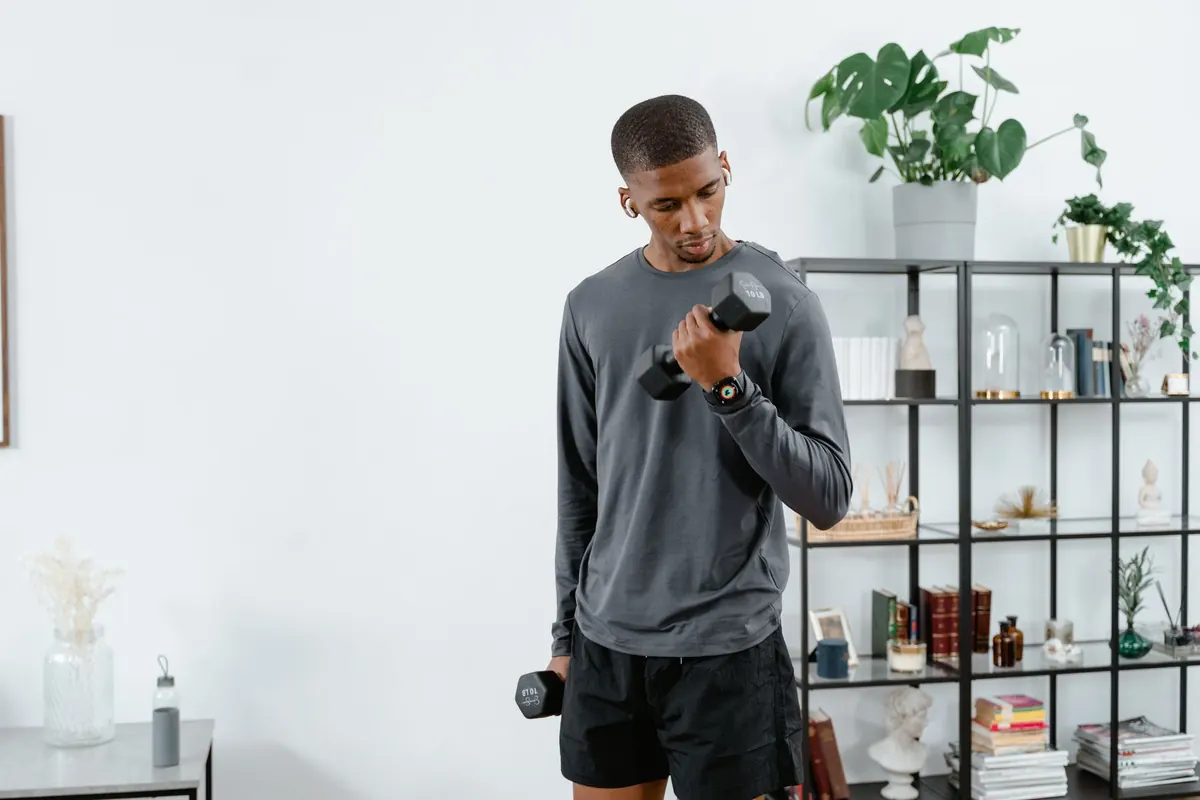
Most strength training happens far from a gym. It happens in a living room with two dumbbells, on a patch of floor, under a doorway pull-up bar. That is not a problem for a smartwatch. At its core, your watch is a stopwatch with a heart rate sensor, and those two things are exactly what a decent strength session needs. The rest is deciding which numbers are worth looking at and which ones you can ignore.
Here is how to get useful data out of a watch for bodyweight and dumbbell work, without buying a chest strap, a barbell, or a subscription you will forget to cancel.
Give the Watch Two Jobs, Not Ten
Tracking falls apart when you try to capture everything. Pick two jobs and let the watch do them well:
- Pace the session. Tell you when to work and when to rest, so you are not guessing or cutting sets short.
- Record enough to repeat it. Next week you should know what you did this week, roughly, without scrolling through a spreadsheet.
Anything beyond that—calorie estimates for a 20-minute circuit, "activity minutes" during a set of squats—is noise. Strength training is stop-start by nature, and most watches handle stop-start badly. Accept that and you will be much happier.
Use Interval Timers Like a Coach Standing Next to You
Nearly every modern watch has an interval or timer function: Apple's Workout app, Garmin's interval workouts, Samsung Health, and most Wear OS watches through the built-in timer or a third-party app. Set it up once and it runs the session for you.
The two formats that cover almost everything:
- Short work, short rest (40 seconds on, 20 off, repeated four to six times) for circuits: push-ups, split squats, rows, planks.
- Long work, long rest (a 45-second set, then two to three minutes of rest) for anything heavy—goblet squats, dumbbell presses, single-leg work.
Switch the alerts to vibration only. The point of the timer is that you stop checking your wrist. Count reps in your head, put the dumbbells down when the watch buzzes, and rest until it buzzes again.
One caveat about resting
A fixed rest period is a starting point, not a rule. If you are still breathing hard when the timer goes, take another 30 seconds. If a set felt easy, cut the rest short next round. The watch gives you a baseline; your breathing is the final say.
Build Custom Workouts Instead of Guessing Each Time
A saved custom workout removes decisions from the middle of a session, which is where motivation tends to leak away. Building one takes about five minutes:
- Choose four to six movements and write them in order—bigger, harder movements first while you are fresh.
- Decide whether each movement is measured in reps (10 push-ups) or time (45 seconds of plank).
- Assign a rest period after each movement and a longer rest after each round.
- Enter it as a custom workout or interval set, and name it something you will recognise at a glance: "Tuesday Dumbbells," "Park Circuit."
- Run it once. If the pacing felt wrong, edit it before the next session—not after five weeks of misery.
Do this for three or four sessions total. You do not need a library of twenty. Repeating the same handful of well-built sessions is how strength actually accumulates.
Heart Rate Zones Are Useful—With a Big Asterisk
Heart rate zones get oversold for lifting. During a set of eight heavy reps, your heart rate barely has time to climb, and your watch will often show a modest number while you are working hard. The number catches up during your rest, which makes it look like resting was the hard part.
Zones work well for three things:
- Conditioning-style circuits. If you are doing 15 minutes of continuous bodyweight work, zones give you an honest read on how hard you are pushing.
- Managing rest. Instead of a clock, wait until your heart rate drops back into a comfortable range before the next set. Simple and surprisingly effective.
- Spotting easy days. If a session that usually pushes you into a higher zone barely moves the needle, you may be under-recovered. Take the hint.
Also worth knowing: optical wrist sensors struggle when you grip hard or bend your wrist—dumbbell curls, push-ups, kettlebell holds. If the reading looks wild, slide the watch a little further up your forearm, snug it down, or just accept the number is approximate.
Logging Reps and Weights Without Typing on a Tiny Screen
The fastest logs are the ones you barely notice making. A few habits that help:
- Log at the end of each set, not the end of the workout. You will not remember round three otherwise.
- Track total reps or total sets rather than every weight change. "Four sets of 10" is enough detail for most purposes.
- Put your logging app on the watch face as a complication so it opens in one tap.
- Use dictation or a voice note if the app supports it—faster than tapping numbers with sweaty fingers.
- For dumbbells, note the weight once per session if it stays constant. No need to log it per set.
If you only record one number, make it total reps per movement. It is the easiest trend to see and the easiest to beat next week.
Measure Progress Differently Without a Barbell
With dumbbells, progress is straightforward: same reps, heavier weight, or same weight, more reps. With bodyweight, you need other levers. Any of these count as getting stronger:
- More reps in the same set, or one extra set at the same effort.
- Slower lowering—three seconds down instead of one.
- Shorter rest between rounds while keeping form.
- A harder variation: feet elevated, single-leg, paused reps.
Keep one lever moving at a time for a few weeks and the watch data will show it. Change everything at once and you will have numbers that mean nothing.
A Simple Week You Can Copy
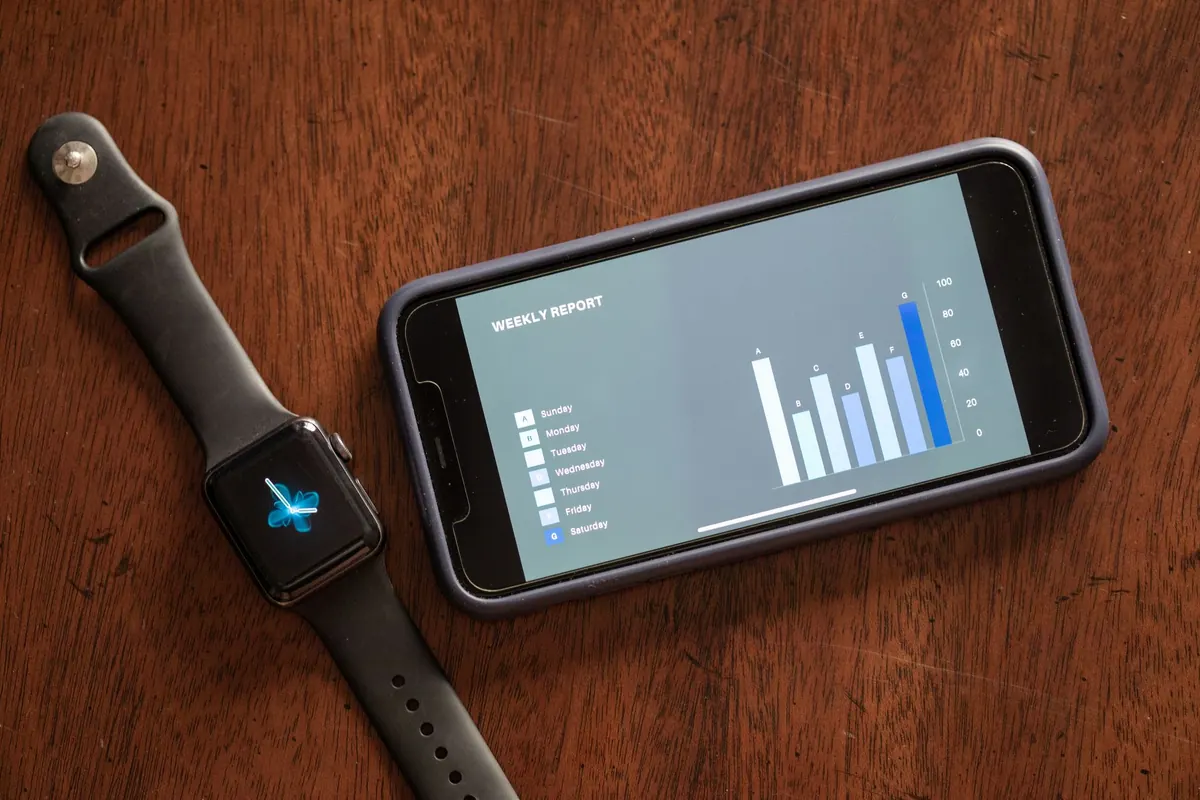
Two dumbbell days, one bodyweight circuit, and one long walk covers a lot of ground for most people. Run each session from a saved custom workout, let the timer handle the pacing, and glance at heart rate only during the circuits. Log total reps for each movement at the end. On Sunday, open the week's data and change exactly one thing—an extra set, five more seconds of work, a slightly heavier dumbbell.
That is the whole system. It is not flashy, but it is repeatable, and repeatable beats clever every time. If you have injuries, heart conditions, or you are returning after a long break, check with a doctor or a qualified trainer before pushing into hard circuits or heavy sets.
Photo: MART PRODUCTION / Pexels